SOFF X · AIHujjatingizni AI yaratsinSovg'ani oling
Mahsulot tavsifi
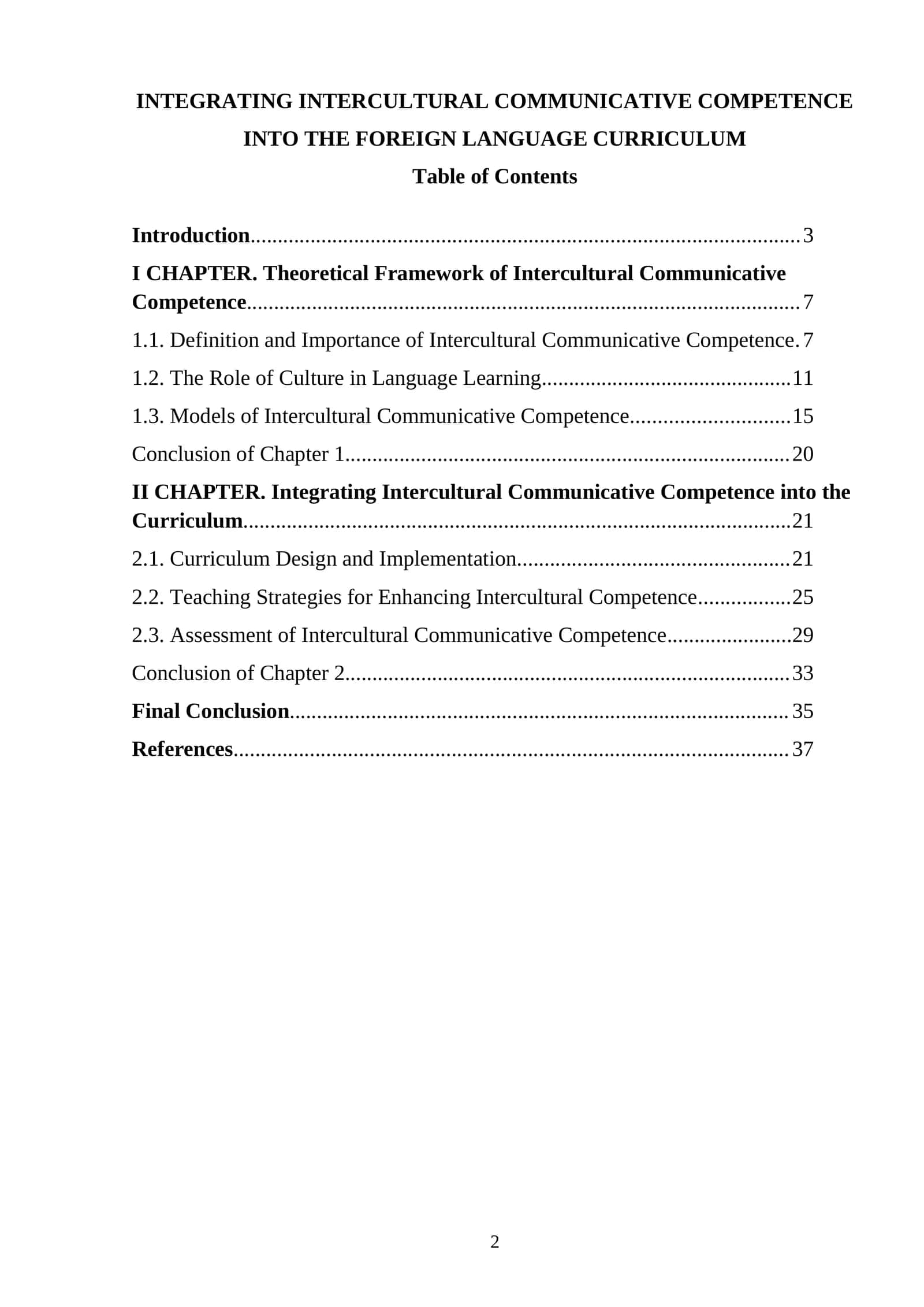
CONTENTS INTRODUCTION.. 3 CHAPTER I. THEORETICAL FOUNDATIONS OF LIFE SKILLS IN EFL EDUCATION.. 5 1.1. Definition and Types of Life Skills. 5 1.2. The Relationship Between Language Learning and Life Skills Development 7 1.3. The Importance of Integrating Life Skills into EFL Curriculum.. 8 CHAPTER II. APPROACHES AND METHODS OF INTEGRATING LIFE SKILLS INTO EFL.. 11 2.1. Communicative and Task-Based Learning Approaches. 11 2.2. Classroom Activities for Developing Life Skills through EFL. 13 2.3. The Role of Teachers and Learning Materials in Life Skills Education. 14 CHAPTER III. CHALLENGES AND STRATEGIES IN IMPLEMENTING LIFE SKILLS EDUCATION.. 17 3.1. Difficulties in Integrating Life Skills into EFL Curriculum.. 17 3.2. Assessment and Evaluation of Life Skills Development 18 3.3. Recommendations for Effective Life Skills Integration in EFL. 20 CONCLUSION.. 23 GLOSSARY.. 25 REFERENCES. 27 The Internet Resources 29 INTRODUCTION The actuality and importance of the theme. The Resolution of the President of the Republic of Uzbekistan No. PQ-5117 dated May 19, 2021, “On measures to bring the popularization of foreign language learning in the Republic of Uzbekistan to a qualitatively new level” set the task of radically reforming the system of teaching foreign languages in our country [1] . In today’s age of globalization and digital technologies, it is not enough to study English as an academic subject alone. The modern labor market and social life require a language learner to possess not only linguistic knowledge, but also “life skills” such as critical thinking, problem-solving, communicative competence, and cooperation. Integrating life skills into English lessons not only increases students’ linguistic wealth, but also prepares them psychologically and socially for real-life situations. Therefore, this topic is extremely relevant within the framework of current national and international educational standards. The purpose of the course paper. The purpose of the course work is to identify and analyze effective ways to integrate life skills into the English language curriculum and develop practical methodological recommendations for optimizing this process. The object of the study. The main object of the course work is the pedagogical process of forming an English language (EFL) curriculum and developing life skills within the learning process. The subject of the study. The subject of the study encompasses the theoretical foundations, instructional methods, and practical tools required for integrating life skills (critical thinking, communication, collaboration, creativity, etc.) into English language lessons. The hypothesis of the course work. If the EFL curriculum shifting away from isolated linguistic drilling systematically embeds core life skills through Task-Based Language Teaching (TBLT) and Project-Based Learning (PBL), then students will experience increased language engagement and simultaneously develop real-world communicative competence and professional readiness. The structure of the course work. The structure of the course work consists of an introduction, three chapters (the first analyzing theoretical foundations, the second covering practical methodology/integration strategies, and the third analyzing recommendations and systemic problems), a conclusion, a glossary, and references. [1] Decision PQ-5117 dated May 19, 2021 of the President of the Republic of Uzbekistan “On measures to bring the activity of popularizing the study of foreign languages to a qualitatively new level in the Republic of Uzbekistan”.
Muallif

- Hujjatlari
- 854
- Sotilgan
- 305